PTE vs IELTS for Australia PR in 2026: Which Test Should You Choose?
If you are planning to apply for Australian permanent residence in 2026, one of the first decisions you will face is which English test to take. For most PR pathways, the two most common options are PTE Academic and IELTS. Both are accepted for skilled migration, and both can help you meet the English requirement needed to apply. The difference lies in how they are scored, how they are delivered, and how comfortable they feel for different test takers.
For many applicants, the choice is not really about which test is “better” in general. It is about which one is better for your target score, your timeline, and your personal strengths. If you understand the score levels, the points system, and the format of each exam, the decision becomes much easier.
English requirements for Australian PR
Australia’s skilled migration system uses English ability as a key part of eligibility and points scoring. For most skilled PR visas, you need at least Competent English. That is the minimum level required to be eligible in many cases. For skilled points migration, higher English scores can also earn you extra points. Proficient English gives you 10 points, and Superior English gives you 20 points.
The file shows the current post-7 August 2025 score levels clearly. For IELTS, Competent English is 6.0 in each skill, Proficient is 7.0 in each skill, and Superior is 8.0 in each skill. For PTE Academic, the equivalent minimum component scores are much more detailed: Competent is Listening 47, Reading 48, Writing 51, Speaking 54; Proficient is Listening 58, Reading 59, Writing 69, Speaking 76; Superior is Listening 69, Reading 70, Writing 85, Speaking 88.
That means if you are aiming for PR points, the target is not just “pass the test.” The real goal is often to reach Proficient or even Superior English, because those scores can improve your chances in the points test.
IELTS and PTE are both accepted
For Australian PR, both IELTS and PTE Academic are accepted English tests. IELTS can be taken in Academic or General Training form, and both are accepted for PR. PTE Academic is a single test that covers all skills. The file also notes that Australia accepts several other tests too, including TOEFL iBT, OET, CELPIP-General, MET, LanguageCert, and Cambridge tests.
In practice, most PR applicants still compare IELTS and PTE because they are the two most widely used options and often the easiest to plan for. The score tables in the file show how the levels compare across tests, which makes it easier to match your target with the right exam.
How the points system works
Australia’s skilled migration points system rewards stronger English. Competent English gets 0 points, but it is the baseline requirement. Proficient English gives 10 points, and Superior English gives 20 points. This is why many applicants spend extra time pushing from a basic passing score to a stronger one. Even a small improvement in English can have a real impact on a PR application.
That also explains why candidates often spend time comparing IELTS 7.0 with PTE equivalents, or IELTS 8.0 with higher PTE scores. If your application is close to the cut-off, those extra points can matter a lot.
Test format: PTE vs IELTS
One of the biggest differences between the two tests is the format.
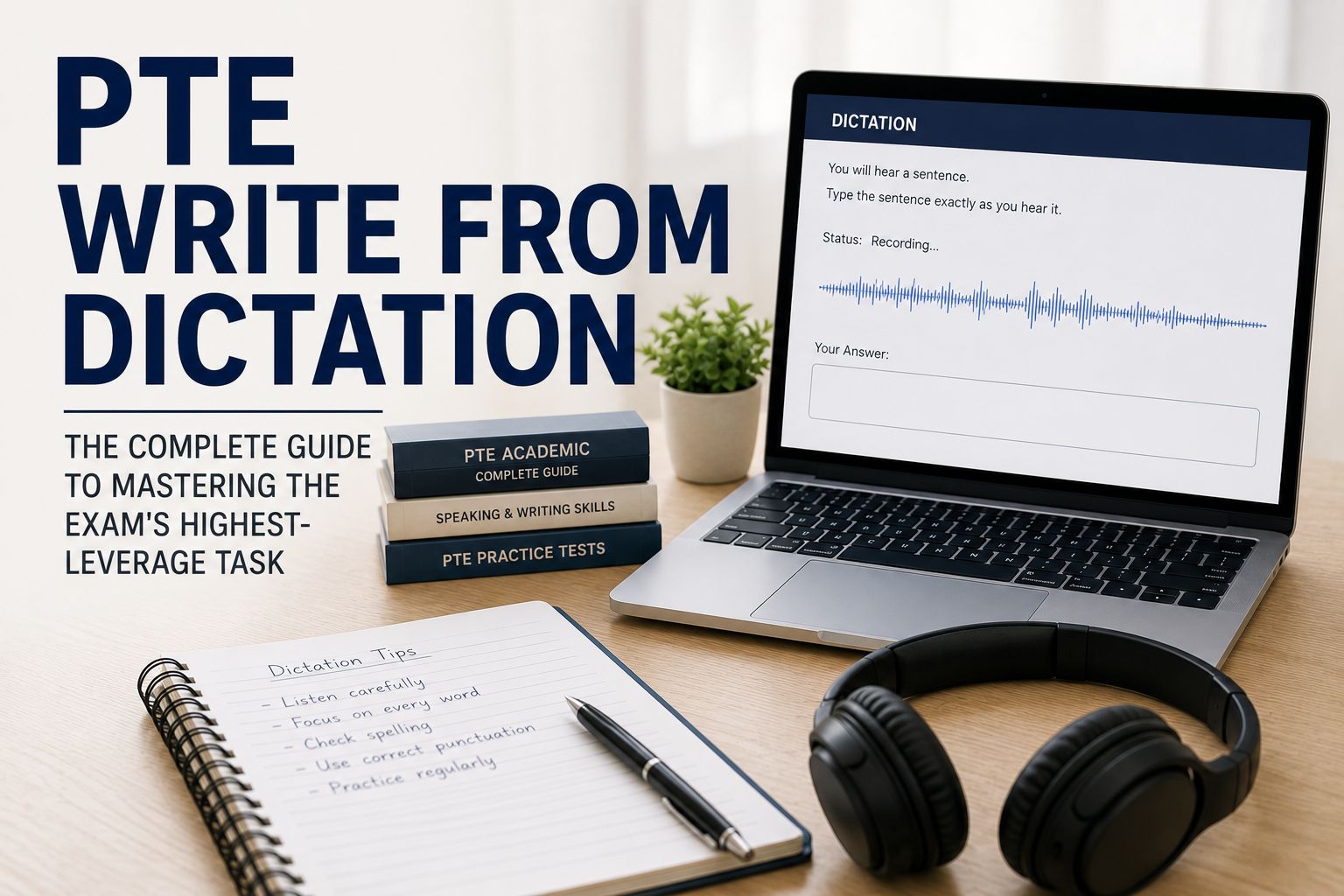
PTE Academic is fully computer-based. You take the whole test on a computer in a test center, and your speaking responses are recorded through a microphone. The test has three sections: Speaking & Writing, Reading, and Listening. The total test time is roughly 3 hours, and the file notes that PTE uses automated scoring for all skills. In most cases, the computer grades the test, with only limited human review if something unusual is flagged.
IELTS, on the other hand, is marked very differently. IELTS Academic and General Training include Listening, Reading, Writing, and Speaking. The speaking part is a face-to-face interview with an examiner, while the other sections are taken on paper or on computer, depending on the format. The total test time is about 2¾ to 3 hours, plus a separate speaking session of around 11–14 minutes.
So the difference is not just about content. It is also about experience. PTE feels more digital and structured, while IELTS feels more conversational and human-led.
Scoring differences
Scoring style is one of the main reasons candidates prefer one test over the other.
PTE uses automated scoring, which means the test is graded by software trained against human experts. This can feel more objective and consistent for people who like computer-based evaluation. It also means your accent, tone, or speaking style beyond intelligibility does not influence a human examiner in the same way it might in a live interview.
IELTS uses trained human examiners for marking, with strict guidelines intended to keep scoring consistent. Some test takers prefer this because they feel a real person can better understand their communication style. Others prefer PTE because they feel more comfortable speaking into a microphone than facing an examiner.
In simple terms, PTE is usually seen as more predictable and fast, while IELTS is often seen as more familiar and conversational.
Results and turnaround time
For applicants working against deadlines, result speed can matter a lot.
PTE Academic usually returns results within 2 calendar days for most candidates. The file notes that only a small number of cases take longer. This fast turnaround is one of PTE’s biggest advantages for PR applicants who need quick documentation.
IELTS has improved in speed too, but the timing depends on the version you take. Computer-delivered IELTS usually gives results in about 1–2 days, while paper-based IELTS can take around 13 days. The speaking test may also happen on a separate day depending on the format.
The file also notes an important upcoming change: by mid-2026, IELTS will be fully computer-based, with paper IELTS phased out worldwide. That means the test environment will become closer to PTE’s digital model over time.
Which test is easier for PR applicants?
There is no universal answer. The better test depends on your strengths.
PTE may suit you better if you are comfortable with computers, typing, microphone speaking, and integrated tasks that combine multiple skills. It is also attractive if you want fast results and objective scoring. IELTS may suit you better if you prefer a live speaking interview, a more traditional test style, or a paper-like academic structure.
The comparison table in the file makes this clear. PTE is fully computer-based and fast, while IELTS is more human-scored and can feel more natural for candidates who perform well in live conversation. Both are accepted for PR, and both can meet the same English requirements.
Recent policy changes affecting 2026 applicants
One of the most important updates in the file is the policy change that took effect on 7 August 2025. Australia expanded the range of accepted English tests and updated score cut-offs. That means the PR landscape is a little broader now than it was before. The file also notes that older test scores taken before that date can still remain valid for up to 3 years, depending on the visa timing.
Another major change is the move to fully computer-based IELTS by mid-2026. This matters because it reduces the gap between IELTS and PTE in terms of format and delivery. If you are choosing a test in 2026, this is worth keeping in mind.
How to prepare effectively
A smart preparation plan begins with a realistic assessment of your current level. The file recommends starting with official practice tests to identify strengths and weaknesses. Once you know where you stand, set a clear target based on the score level you need for PR points.
The preparation advice in the file is practical and straightforward: use official resources, practice under timed conditions, focus on all four skills every day, and review mistakes carefully. For PTE, this means getting comfortable with the computer interface and integrated tasks. For IELTS, it means practicing essays, reading passages, speaking with a partner, and timing each section properly.
A three-month preparation plan is also suggested in the file: first diagnose your level, then spend several weeks on skill-building, then take multiple full mock tests, and finally fine-tune weak areas before test day. This kind of structured approach is usually much more effective than studying randomly.
Final choice: PTE or IELTS?
If you want fast results, fully computer-based delivery, and automated scoring, PTE Academic is often the stronger choice. If you prefer a human speaking test, familiar academic-style tasks, and the flexibility of either paper or computer delivery, IELTS may suit you better. Both can work for Australia PR, and both can lead to the same migration outcome if you hit the right score.
The real decision should come down to where you are most likely to score best. For some candidates, PTE feels easier because it is structured and fast. For others, IELTS feels easier because it is more traditional and conversational. The best test is the one that matches your strengths and gets you to the required English level with the least stress.
FAQs
Are both PTE Academic and IELTS accepted for Australia PR?
Yes. Both are accepted for skilled migration, and IELTS can be taken in Academic or General Training form.
What English score do I need for PR?
Most skilled PR visas require at least Competent English, which is IELTS 6.0 in each skill or the PTE equivalent.
How do I get extra points for English?
Proficient English gives 10 points, and Superior English gives 20 points on the skilled migration points test.
Which test gives faster results?
PTE usually returns results in about 2 days. Computer IELTS also gives fast results, while paper IELTS takes longer.
Will IELTS still have paper tests in 2026?
The file says paper IELTS will be phased out by mid-2026, and IELTS will become fully computer-based.